 Cam Music
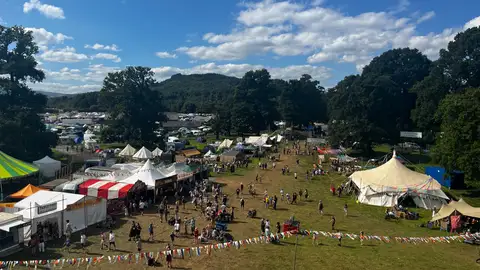
UK music festivals by month: how the season runs
Ask anyone in Britain when festival season starts and you will get two answers. One camp says the late May bank holiday, when the first family weekends open their gates in Sussex woodland. The other says nothing really happens until the solstice. Both are right, and that is the first thing to know about UK music festivals by month: the calendar is long, uneven and heavily weighted towards July and August, with a thin start in May and a tail that reaches into the first week of September.
The shape matters if you are planning around work, school holidays or a train timetable. English school holidays begin in the second half of July, so the family festivals cluster there. The August bank holiday, the last Monday of the month, carries a whole weekend of its own: Reading and Leeds, Shrewsbury Folk Festival and a string of smaller events all claim it. June belongs to the large rock and pop fields and to classical music on the Suffolk coast.
This guide sorts the season by month first and by type second. Dates move every year, so the table gives the usual slot rather than a fixed date. The organiser's own site always has the final word.
The festival calendar at a glance
The festivals below were all running in their most recent season and are among the best known in their style. The list is not exhaustive. It is a skeleton to hang a summer on, with each event placed in the month it normally opens.
| Usually | Festival | Where | Style |
|---|---|---|---|
| Late May bank holiday | Elderflower Fields | Pippingford Park, East Sussex | Family, acoustic, woodland |
| June | Download | Donington Park, Leicestershire | Rock and metal |
| Mid to late June | Aldeburgh Festival | Snape Maltings, Suffolk | Classical and new music |
| Late June, outside fallow years | Glastonbury | Worthy Farm, Somerset | Everything at once |
| Early July | Love Supreme | Glynde Place, East Sussex | Jazz and soul |
| Mid July to mid September | BBC Proms | Royal Albert Hall, London | Classical |
| Late July | Latitude | Henham Park, Suffolk | Indie, comedy, arts |
| Late July | WOMAD | Neston Park, Wiltshire | World music |
| Late July into August | Cambridge Folk Festival | Cherry Hinton Hall, Cambridge | Folk and roots |
| Mid August | Fairport's Cropredy Convention | Cropredy, Oxfordshire | Folk-rock |
| Mid August | Green Man | Glanusk Park, Powys | Indie and folk |
| August bank holiday | Reading and Leeds | Reading and Bramham Park | Rock, pop, rap |
| Early September | End of the Road | Larmer Tree Gardens, Dorset | Indie and alt-folk |
Folk festivals and family festivals
Two types of festival do things the big fields cannot. Folk festivals tend to be older, smaller and more rooted in a place. Cambridge Folk Festival has been held since 1965, Sidmouth has passed seventy editions, and the seaside folk weeks at Broadstairs and Whitby take over whole towns rather than a single field. They run mostly from late July to the August bank holiday, and many of them sell their best camping pitches months ahead.
Family festivals are built around children rather than tolerating them. Elderflower Fields opens the year on the late May bank holiday and describes itself as a first festival for families. Camp Bestival at Lulworth Castle, Deer Shed in North Yorkshire and Latitude in Suffolk follow in late July, timed for the start of the school holidays, and Just So in Cheshire closes the run in August. Ticket bands by age are the norm: very young children usually go free, primary-age children need their own cheaper ticket, and teenagers sit in a band of their own.
The big fields: rock, indie and pop
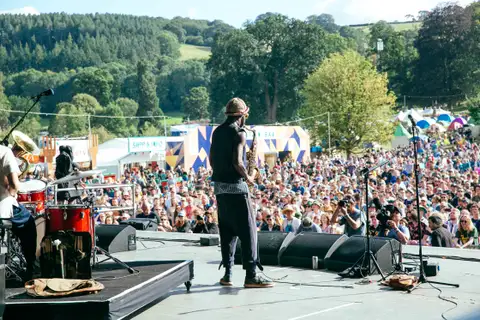
June and August hold the large greenfield events. Download fills Donington Park with rock and metal fans in June. Glastonbury, the largest of all, runs on a working dairy farm in Somerset and takes a fallow year roughly once every five years so the land can recover, which means a summer without it every so often. When it is on, it occupies the last week of June.
Latitude in Suffolk mixes music with comedy, theatre and literature at Henham Park near Southwold. Green Man sits in a valley at Glanusk Park near Crickhowell in mid August, and its most recent edition sold out ahead of the weekend. Reading and Leeds share one bill across two sites over the August bank holiday and draw a young crowd. End of the Road, at Larmer Tree Gardens on the Wiltshire and Dorset border, is the usual full stop: it runs in the first week of September and also sold out ahead of its most recent edition.
Jazz, world and classical festivals
Not every British music festival involves a tent. Love Supreme near Lewes is one of the largest outdoor jazz festivals in Britain and recently expanded to three full days of main-stage programming. WOMAD, which grew out of Peter Gabriel's interest in music from around the world, moved to a new home at Neston Park near Corsham in Wiltshire after nearly two decades at Charlton Park.
Classical audiences have their own summer. The Aldeburgh Festival, founded by Benjamin Britten, runs for about two and a half weeks in June around the concert hall at Snape Maltings. The BBC Proms fill the Royal Albert Hall nightly from mid July to mid September, with cheap standing places sold on the day. Neither needs camping gear, and both are easy to reach by train.
The season from the East of England
For anyone based in Cambridge, Suffolk or Norfolk, a surprising share of this calendar is close to home. Cambridge Folk Festival happens in the city itself, at Cherry Hinton Hall on the south-east side. Latitude is about seventy miles east, and the Aldeburgh Festival a little further along the same coast. Snape Maltings, with its reed beds and its converted malt-house concert hall, is one of the most distinctive music venues in the country.
The western festivals take more planning. Green Man, WOMAD and End of the Road are long trips by train from the east, usually with a change in London and a shuttle bus at the end. Cropredy, near Banbury, is easier than it looks on a map: Banbury station is on the line from London Marylebone.
Tickets: tiers, sell-outs and resale
Most large festivals now sell in tiers, with the cheapest tickets going first and prices stepping up as each release sells out. Cambridge Folk Festival, for example, opens its first tier in early October for the following summer, and its first release recently sold out before the second went on sale. Green Man and End of the Road both sold out in advance of their latest editions.
When a festival is sold out, buy only through its official resale partner. Green Man uses Tixel; others use Twickets or their own exchange. Tickets bought from unofficial sellers can be cancelled at the gate, and names on wristbands are increasingly checked. For first-timers, the companion guide on this site covers choosing a festival, camping and what changes once you have been to a few.